How ADHD Changed How I See Myself
For a long time, I thought something was wrong with me. Not in a dramatic way. Just this quiet, persistent feeling that I was broken in ways I couldn't explain and other people couldn't see. I Used t...
For a long time, I thought something was wrong with me. Not in a dramatic way. Just this quiet, persistent feeling that I was broken in ways I couldn't explain and other people couldn't see.
I Used to Think I Was the Problem
I grew up thinking I was lazy. Stupid, even. I could hyperfocus on the things I loved and completely check out of everything else. In school, that looked like failing math not because I couldn't learn, but because I had zero interest and my brain simply refused. Teachers saw a kid who wasn't paying attention. I saw a kid who didn't belong.
I cried a lot as a child. I was emotionally all over the place. I hid on the playground once in elementary school to see if anyone would notice I was gone. That's the part people don't talk about with ADHD. It's not just fidgeting and forgetting homework. It's this deep, aching feeling of being outside the circle while everyone else is inside it.
 25:45
25:45 Nobody told me I was neurodivergent. Nobody had the tools to help me understand myself. So I just absorbed the message that I was too much and not enough at the same time.
The Moment Everything Shifted
I was in my late 20s when a friend looked at me and said, "Girl, you have ADHD." She wasn't being mean. She was being real. And I didn't believe her at first. I started reading about it, watching everything I could find, and slowly started recognizing myself in all of it. Then I went and got a formal diagnosis through a neuropsychological evaluation.
That piece of paper didn't fix anything. But it did something more important. It gave me a framework. Suddenly the emotional dysregulation made sense. The impulsivity made sense. The way I could run a million ideas at once and still feel stuck made sense. I wasn't broken. I was just wired differently, and nobody had ever given me the instruction manual for my own brain.
What Changed When I Stopped Fighting Myself
My relationship with myself changed completely once I understood what was actually going on. I stopped calling myself lazy. I stopped apologizing for the way my brain works. I started getting curious instead of critical.
Here's what most people don't see from the outside: my brain is going 100 miles an hour, all day, every day. A million thoughts running at once. Ideas piling on top of ideas. It can look like chaos. From the inside, it often feels like chaos. But it's also how I built my business. It's how I connect with clients. It's how I show up as a creative, engaged, present-ish mom. The same brain that made me feel like a loser on the playground is the reason I can hold space for a client who's struggling and immediately think of 12 different ways to help them.
I had to learn to work with it instead of against it. That means starting with the task I actually want to do, not the one I "should" do first. It means using lists and rewards and not shaming myself when my room looks like a tornado came through. It means recognizing that organization is genuinely hard for my brain, not a character flaw.
ADHD and Women: We Were Set Up to Stay Small
One thing I want to name is how differently ADHD shows up for women, and why so many of us go undiagnosed for so long. Most of the early ADHD research was done on hyperactive young boys. Loud, disruptive, impossible to ignore. Women with ADHD, especially those of us with the inattentive subtype, learned to mask. We got quiet. We followed the rules on the outside while our brains were spinning on the inside.
I masked for most of my life. I fought the urge to speak my opinion because being outspoken felt dangerous, unacceptable, too much. Women have been conditioned to be quiet and sit still, and that is a terrible environment for a neurodivergent brain. No wonder so many of us spent years thinking we were the problem.
We were not the problem. The systems were never built for us.
Who I Am Now
I'm in therapy. I take my medication. I know my triggers, especially around my cycle and how hormonal shifts hit my dopamine levels hard. I understand that my mood and my gut and my brain are all connected, and I treat them that way.
I'm not going to pretend I have it all figured out. Some days I'm still in my emotional ADHD cocoon, not feeling great, struggling to get through my to-do list. But I know what's happening now. That awareness is everything. It's the difference between spiraling and pausing.
Understanding my ADHD didn't make me a different person. It made me actually meet the person I already was. And I like her a lot more than I liked the version of myself who thought she was a loser hiding behind a bush waiting to be found.
If any of this resonates and you're wondering how your ADHD might be affecting the way you eat, your energy, your hormones, or your relationship with food, I want to talk. Book a discovery call with me at wimn.co or follow along on social for more honest conversations about ADHD, nutrition, and women's health.
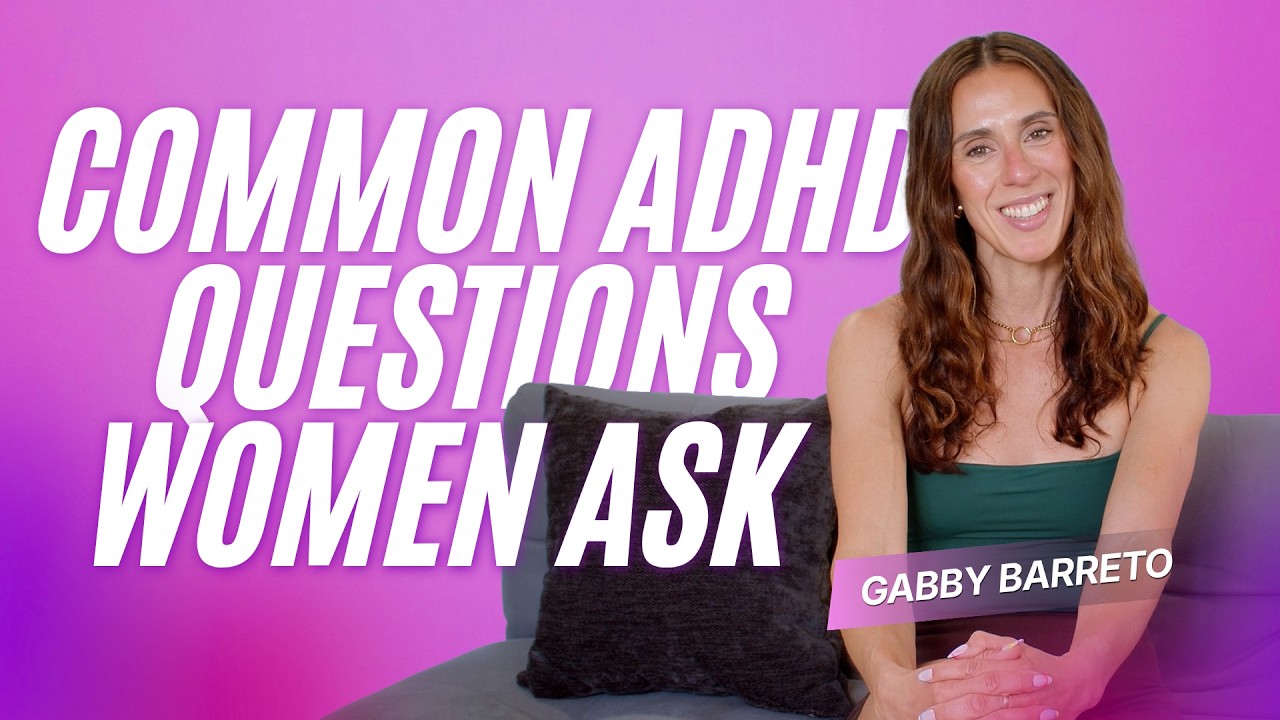
FULL EPISODE
How ADHD Changed How I See Myself
Want this for your specific situation?
The blog covers the patterns. Coaching is where we build something around you, your training, your brain, your life.