Powerlifting for Women: What Happens When You Stop Being Afraid of the Barbell
Strength coach and competitive powerlifter Madison Kearney breaks down why heavy lifting changes everything for women, and how to fuel for it.
You don't need more cardio. You need a barbell.
 3:45
3:45 If you've been spinning your wheels in barre, Pilates, or cycling classes and wondering why your body isn't changing the way you want it to, this is worth reading. Low-weight, high-rep, cardio-adjacent training has had a serious cultural moment. And it can be a great starting point. But for most active women who want to get stronger, build muscle, and actually perform, it stops working fast.
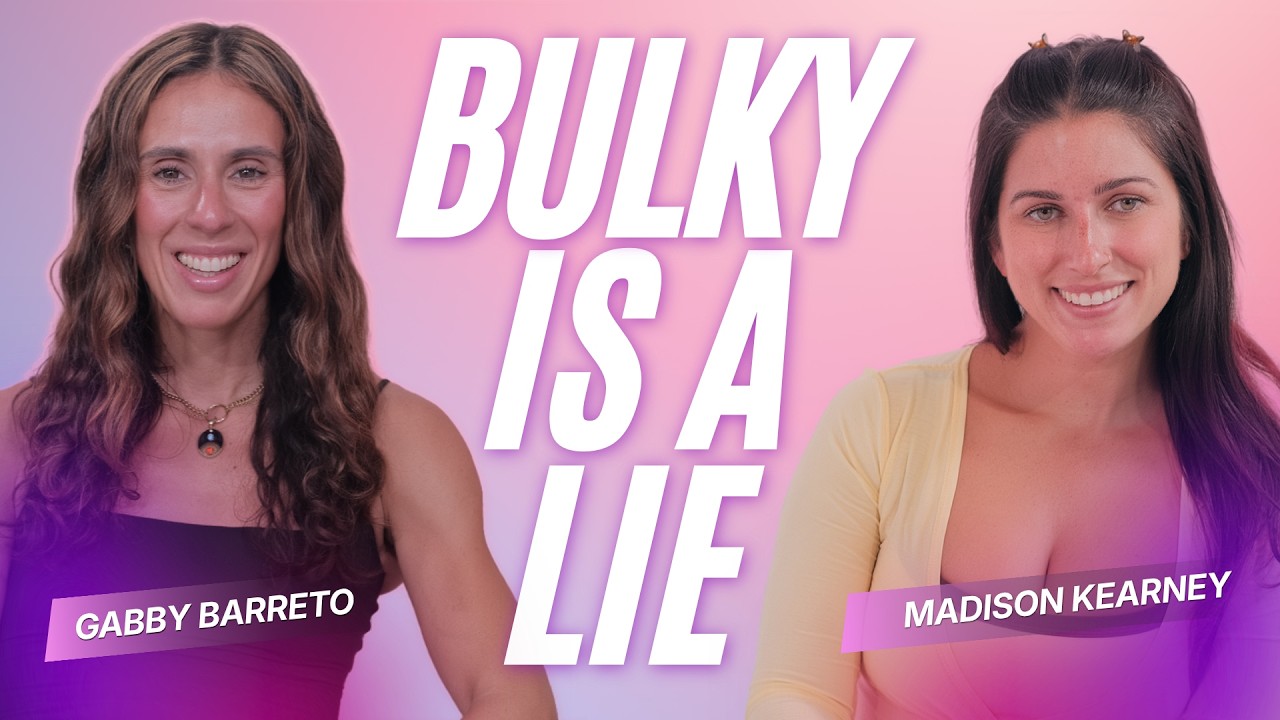
I sat down with Madison Kearney, a strength coach and competitive powerlifter from Long Beach, New York, who started her fitness career in a room full of wrist weights and ankle weights where the whole pitch was "no bulk, just lean." She knows both worlds. And what she found on the other side of a barbell changed everything.
What powerlifting actually is (and isn't)
 2:16
2:16 Powerlifting is three lifts: squat, bench press, deadlift. That's it. You're not doing circuits. You're not doing AMRAP. You're going for maximum effort on single reps. At a meet, you get three attempts at each lift, starting with a weight you know you can move and building to near-max by the third attempt. Your best successful reps across all three lifts are added together into a total, and that's how you're ranked within your weight class.
There's also something called a Wilks or DOT score that accounts for body weight, so the biggest lifter doesn't automatically win overall. It's a legitimate sport with real structure. And it's one of the most beginner-accessible strength sports out there, because the movements are ones your body is already designed to do.
The "I don't want to get bulky" thing
 1:13
1:13 Madison walked into powerlifting refusing to bench press. Capping her squat at 95 lbs. Convinced that lifting heavy would make her bulky. This is not unique to her. I hear this constantly.
Here's what actually happens when women lift heavy: you build muscle, which increases your resting metabolic rate, supports bone density, improves insulin sensitivity, and makes daily life physically easier. What doesn't happen, without a significant caloric surplus and years of dedicated training, is dramatic bulk. The fear of getting bulky has kept a lot of women in cardio classes that are burning them out without building them up.
Madison's entry point was wanting a bigger butt. Totally valid. What she found was that heavy compound lifting, the squat in particular, did more for her physique than anything she'd done in 12 years of fitness classes. And then she got competitive. And then she discovered she was actually good at this.
What competition nerves tell us about fueling
 10:03
10:03 Madison described meet-day anxiety in a way that every athlete I've worked with would recognize: can't eat, can't speak, laying on the floor, sour patch kids in hand. This is your sympathetic nervous system running the show. Digestion slows down. Appetite tanks. Nausea shows up.
This is not an excuse to skip fueling. It's a reason to plan your competition-day nutrition in advance and practice it in training. If you can't tolerate solid food on game day, you still need carbohydrates. Simple, fast-digesting options work. Gummies, sports drinks, gels, fruit pouches. The goal is to keep blood glucose stable so your brain and your muscles both have what they need when you step up to that bar.
What doesn't work: half a muffin three hours before you compete. I've seen it. It doesn't end well.
Why women who already train should consider lifting heavier
 4:10
4:10 Madison spent years in group fitness before she touched a barbell. A lot of the women I work with have a similar story. They're active, they're consistent, they're doing everything "right," and they're still not seeing the strength or body composition results they want.
Progressive overload is the missing piece. You have to give your body a reason to adapt. Pilates won't do that beyond a certain point. Neither will the same set of 10-lb dumbbells you've been using for two years. Adding load systematically over time is what drives muscle growth, and muscle is what drives everything else: metabolism, hormones, performance, injury resilience.
You don't have to compete. You don't have to deadlift 300 lbs. But you probably need to lift heavier than you think you do.
Actionable takeaways
If you're not sure where your nutrition is actually holding you back, take the ADHD + Nutrition Scorecard and find out.
FULL EPISODE
Powerlifting for Women: What Happens When You Stop Being Afraid of the Barbell
Want this for your specific situation?
The blog covers the patterns. Coaching is where we build something around you, your training, your brain, your life.