How Running and Nutrition Helped One Woman Heal After Divorce Trauma
Emmi Polansky got divorced at 23, nine weeks postpartum. Here's how fitness and nutrition became her actual healing tools.
Nine weeks postpartum, still recovering from a C-section, and your husband tells you he doesn't want to be married anymore. That's not a bad day. That's a complete dismantling of the life you thought you were building. For Emmi Polansky, that moment at 23 years old became the thing that broke her open — and eventually, the thing that built her back up.
I sat down with Emmi on the Woman in Motion Nutrition podcast to talk about divorce, postpartum trauma, and what actually helped her heal. Spoiler: it wasn't a therapist telling her to journal. It was running. It was lifting. It was eating to fuel her body when everything in her life felt like it was falling apart. Here's what came out of that conversation.
Postpartum trauma doesn't need a dramatic event to wreck you
 7:04
7:04 Let's be real about what nine weeks postpartum actually looks like. Hormones all over the place. Sleep-deprived to the point of hallucinating. Still physically healing from a major abdominal surgery. Your body is not yours yet. Your brain isn't firing right. You need support around you like you need oxygen.
Emmi had all of that happening — and then her marriage ended. The trauma wasn't just emotional. It was layered directly on top of a postpartum body that had zero reserves left. That context matters. When we talk about trauma and healing, we can't pretend the body isn't involved. It always is.
What trauma actually does to your body
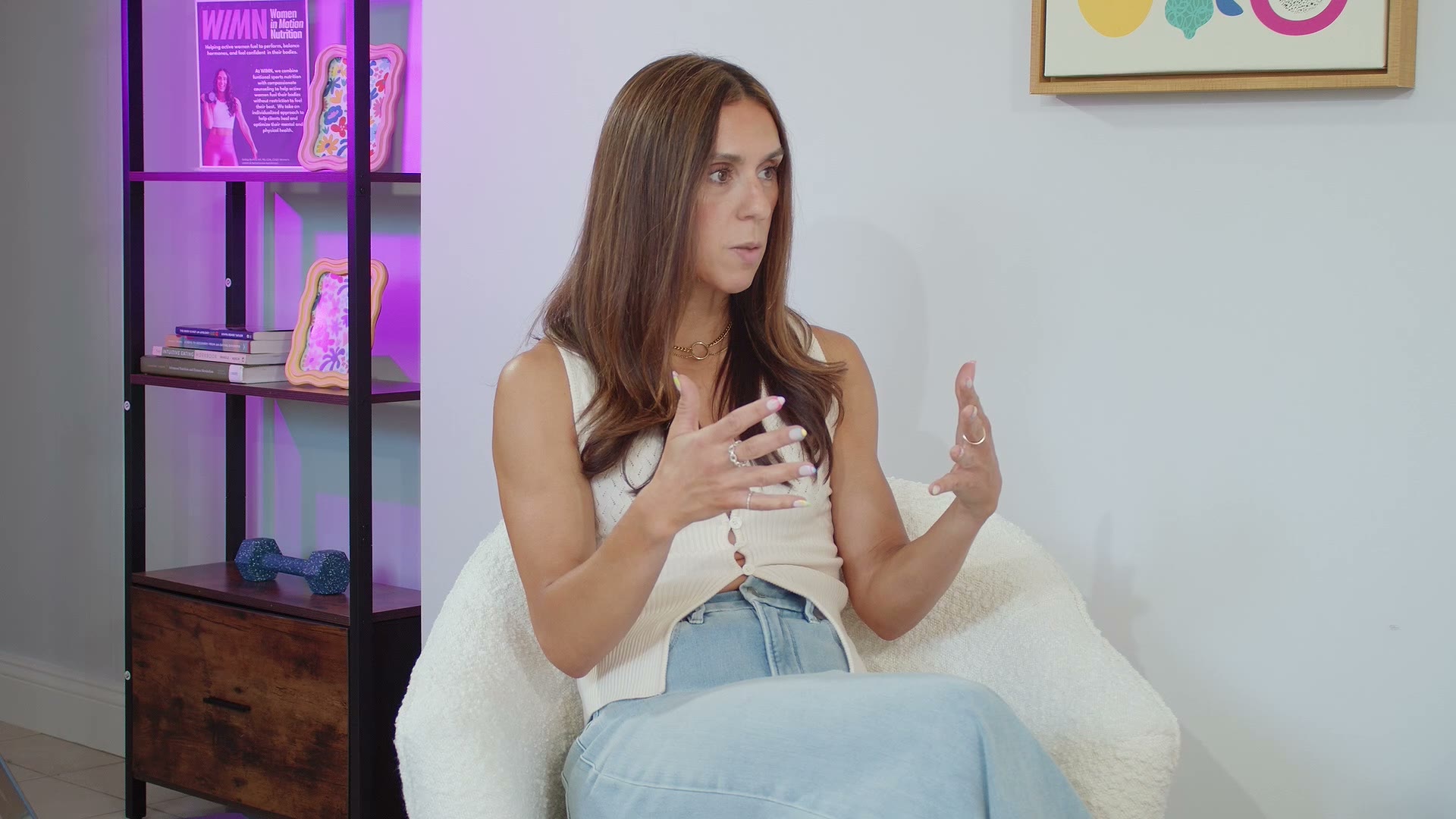 11:08
11:08 Unprocessed trauma doesn't just live in your head. It shows up in your labs. It shows up in your gut. I see it constantly in my practice — women coming in frustrated that they can't lose weight, that their thyroid is off, that their digestion is a mess. We chase the diagnosis and never ask what happened to them.
Chronic stress and dysregulation from traumatic events keeps cortisol elevated for months or years. That wrecks sleep, drives insulin resistance, tanks gut motility, and makes fat loss almost impossible regardless of what you're eating. The nutrition piece matters. The movement piece matters. But if we skip over the trauma piece, we're just spinning our wheels.
Fitness wasn't a distraction — it was medicine
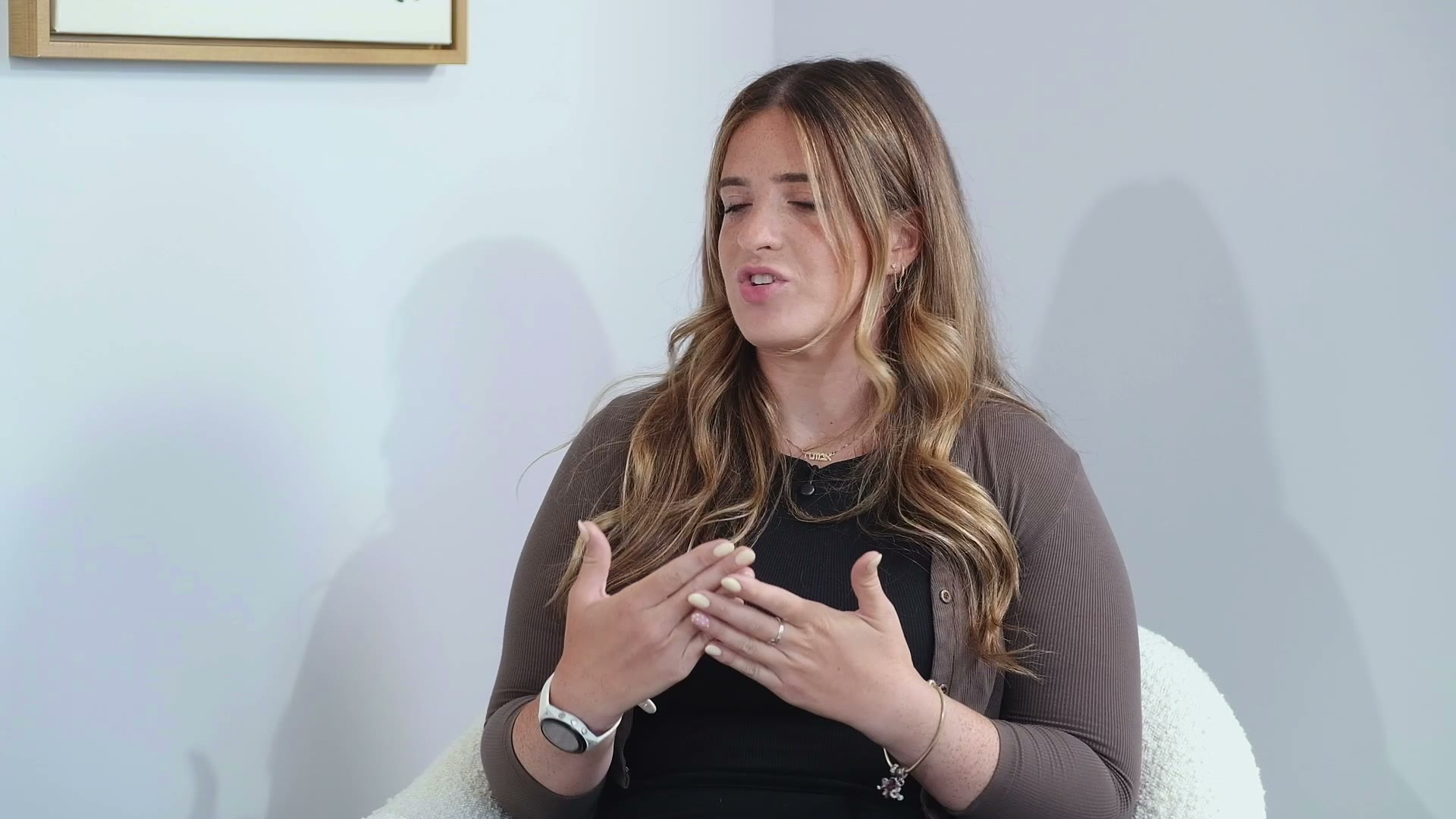 1:41
1:41 Emmi didn't pick up running to lose the baby weight. She ran because it was one of the only things that made her feel like herself again. There is real science behind that. Aerobic exercise downregulates the stress response. It moves the body through the fight-or-flight activation that trauma triggers and never fully resolves. It gives the nervous system a way out.
For women healing from anything — a divorce, a loss, a diagnosis — structured movement isn't optional. It's one of the most powerful tools we have for nervous system regulation. Not because it burns calories. Because it changes your brain chemistry in ways that nothing else can replicate at that speed.
Sharing her story publicly accelerated her healing
 5:11
5:11 Emmi started posting about her experience not to build a brand. She posted because she needed somewhere to put it. She talked to her camera like she was talking to herself — telling herself she was going to be okay. And then thousands of women showed up in her comments saying "me too."
That's what authentic community does. It breaks the isolation that trauma creates. And isolation is one of the most physiologically damaging parts of going through something hard. Connection is not soft. It is a biological need. When Emmi realized she wasn't alone, something shifted. That shift is part of why she healed as well as she did.
Her divorce guidebook includes workouts — and that's exactly right
 6:42
6:42 Emmi wrote a guidebook for navigating divorce that includes fitness programming and nutrition. People think that's weird. I think it's the most logical thing I've ever heard. If you're going through a major life rupture, your body needs structure when everything else is chaos. Consistent meals. Consistent movement. Sleep protection. These aren't luxuries. They are the scaffolding that holds you together while everything else gets sorted out.
You don't need a perfect plan. You need a consistent one. Something that gives your nervous system a signal that you are safe, that tomorrow is predictable, that you are taking care of yourself even when someone else didn't.
What to actually do when you're in survival mode
- Eat on a schedule. Skipping meals spikes cortisol. You already have too much of it. Eat something every 3-4 hours even if you're not hungry.
- Prioritize protein. Stress is catabolic. You are breaking down muscle tissue. Aim for 25-40g of protein per meal to counter that.
- Move your body daily — but don't crush yourself. A 20-minute walk regulates your nervous system. You do not need a two-hour gym session when you're already running on empty.
- Get your bloodwork done. Chronic stress affects thyroid function, iron, and blood sugar. Know your numbers before you decide your body is broken.
- Find one person who gets it. Not to fix you. Just to witness you. Isolation makes everything worse.
Emmi's story is not about bouncing back. It's about building something completely new from a place of total devastation. Fitness and nutrition were her tools — not because they erased what happened, but because they gave her a body strong enough to carry it.
If you want to understand how your own stress, hormones, and nutrition habits are connected, take the ADHD + Nutrition Scorecard. It takes less than five minutes and gives you a real starting point.

FULL EPISODE
How Running and Nutrition Helped One Woman Heal After Divorce Trauma
Want this for your specific situation?
The blog covers the patterns. Coaching is where we build something around you, your training, your brain, your life.